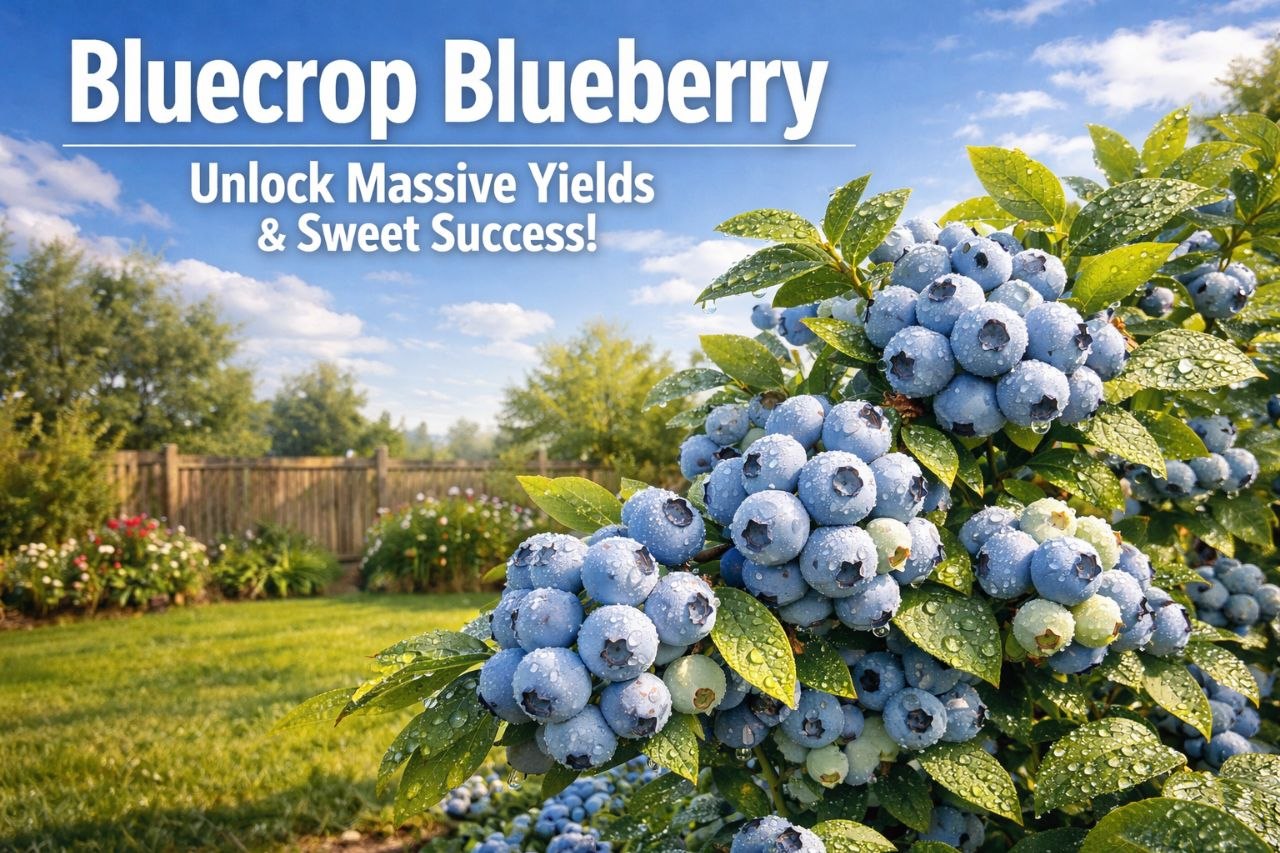
Bluecrop Blueberry stands as one of the most dependable and rewarding high-chill northern highbush varieties you can plant. Gardeners love it for its vigorous growth, crack-resistant fruit, and long harvest window that delivers basket after basket of delicious berries.
If you dream of picking sweet, juicy Bluecrop Blueberry straight from your own garden, this guide shows exactly how. Whether you are a beginner or experienced grower, these proven steps will help you achieve explosive yields and healthy plants year after year.
What Makes Bluecrop Blueberry Special
Bluecrop Blueberry is a northern highbush type that thrives in cooler climates with real winter cold. It needs 800–1,000+ chill hours to produce heavy crops of medium-to-large, light-blue berries with classic sweet-tart flavor.
The bush grows upright and vigorous, reaching 4–6 feet tall and wide at maturity. Its firm berries hold up well for fresh eating, freezing, baking, or making jams. Many experienced growers call Bluecrop Blueberry the “best all-around” choice because of its adaptability and consistent performance.
History Behind the Bluecrop Blueberry Success Story
Bluecrop Blueberry traces its roots to the early 1900s when USDA botanist Frederick Coville and Elizabeth White selected superior wild plants in New Jersey. Released in 1941, Bluecrop Blueberry quickly became one of the most planted varieties worldwide thanks to its reliability and high fruit quality.
Even in 2026, Bluecrop Blueberry remains a favorite for both home gardens and small farms because it balances flavor, yield, and ease of care.
Ideal Conditions for Thriving Bluecrop Blueberry Plants
Bluecrop Blueberry loves full sun—at least 6–8 hours of direct sunlight daily. More sun means sweeter berries and bigger harvests.
Soil is the secret to success. It demands acidic conditions with pH 4.5–5.5. Well-drained, organic-rich soil prevents root problems. In heavy or alkaline soils, use raised beds or large containers filled with a 50/50 mix of peat moss and pine bark.
Consistent moisture matters too. Give Bluecrop Blueberry plants about 1–2 inches of water per week during the growing season. Mulch with 3–4 inches of pine bark or wood chips to keep roots cool and soil acidic.
Step-by-Step Planting Guide for Bluecrop Blueberry
Plant Bluecrop Blueberry in late fall or early spring while dormant. Space bushes 4–6 feet apart for good air flow and easy picking.
Dig a hole twice as wide as the root ball but no deeper. Mix in plenty of acidic organic matter. Set the plant at the same depth it grew in the nursery pot. Water deeply right after planting.
Add thick mulch immediately, keeping it 2 inches away from the trunk. For the first year, prune back the top growth by about half so roots establish faster.
Container growing works beautifully on patios. Choose pots of at least 20–25 gallons with excellent drainage.
Essential Care Tips to Boost Bluecrop Blueberry Yields
Pruning is the most important yearly task for Bluecrop Blueberry. Do it in late winter while the plant is dormant. Remove dead or weak canes, thin crowded areas, and cut out any stems older than 5–6 years. This keeps the bush productive and prevents smaller fruit.
Fertilize lightly in early spring and after harvest using an acid-loving fertilizer or ammonium sulfate. Never use high-pH products.
Monitor soil pH every 1–2 years and adjust with elemental sulfur if needed. Keep the soil evenly moist but never soggy—drip irrigation works best.
Common Challenges and Simple Solutions for Bluecrop Blueberry
Birds adore ripe Bluecrop Blueberry, so cover bushes with netting as soon as berries start turning blue.
Watch for fungal issues like mummy berry by maintaining good air circulation and removing fallen fruit. Proper spacing and pruning usually prevent most problems.
Insect pests such as aphids or Japanese beetles appear occasionally. Neem oil or insecticidal soap handles them safely.
If your area has fewer than 700 chill hours, Bluecrop Blueberry may leaf out late or produce lightly. High-altitude cold regions suit it best; warmer plains need protected setups or different low-chill types.
When and How to Harvest Bluecrop Blueberry
Wait until berries turn fully blue with a light powdery bloom and taste sweet. Pick every 5–7 days over a 4–6 week period for the longest fresh supply.
Harvest in the morning after dew dries. Gently twist berries off—they should release easily when ripe. One mature Bluecrop Blueberry bush can yield 10–20 pounds of fruit.
Store fresh berries in the refrigerator up to 10–14 days or freeze them for year-round use in smoothies, pies, and snacks.
Nutritional Power of Bluecrop Blueberry
Bluecrop Blueberry packs powerful antioxidants, especially anthocyanins that give the berries their beautiful color. One cup delivers vitamin C, vitamin K, manganese, and fiber while staying low in calories.
Regular enjoyment supports heart health, brain function, and healthy blood sugar levels. Home-grown Bluecrop Blueberry tastes even better because you pick them at perfect ripeness.
Bluecrop Blueberry At-a-Glance (Mobile-Friendly Table)
| Feature | Details |
|---|---|
| Chill Hours | 800–1,000+ |
| Mature Height | 4–6 feet |
| Berry Size & Color | Medium-large, light blue |
| Flavor | Sweet-tart, firm |
| Average Yield per Bush | 10–20 pounds |
| Best USDA Zones | 4–8 |
| Harvest Season | Mid-season, 4–6 weeks long |
| Pollination | Self-fertile (better with companion) |
Frequently Asked Questions About Bluecrop Blueberry
How many chill hours does Bluecrop Blueberry need? Bluecrop Blueberry requires 800–1,000+ chill hours of winter cold to produce reliably. Without enough cold, expect lighter crops or delayed growth.
Can I grow Bluecrop Blueberry in containers? Yes! Large 20–25 gallon pots with acidic potting mix work perfectly for patios or small spaces. Ensure excellent drainage and consistent watering.
When does Bluecrop Blueberry start producing fruit? You will see light crops in year 2–3. Full production of 10–20 pounds per bush usually arrives by year 6–8 with proper care.
Is Bluecrop Blueberry self-pollinating? It is self-fertile, but planting a second compatible bush nearby gives larger berries and higher total yields.
What is the best soil pH for Bluecrop Blueberry? Aim for 4.5–5.5. Test your soil and amend with peat moss, pine bark, or sulfur well before planting.
How do I protect Bluecrop Blueberry from birds? Use bird netting as soon as berries begin coloring. It is the simplest and most effective way to save your harvest.
Conclusion: Start Your Bluecrop Blueberry Journey Today
Bluecrop Blueberry rewards patient growers with decades of delicious, healthy fruit and beautiful garden presence. Its vigorous growth, crack-resistant berries, and proven reliability make it a smart choice for anyone serious about home fruit growing.
Follow the right soil, sun, water, and pruning steps and you will enjoy massive harvests of sweet Bluecrop Blueberry every summer. Test your soil, source healthy plants from reputable nurseries, and give the bushes the acidic, well-drained home they love.
Your future self will thank you when you walk outside and fill baskets with fresh, antioxidant-rich berries grown by your own hands. Whether you have a backyard plot or a few containers on the patio, Bluecrop Blueberry can deliver the bountiful success you have been dreaming about.
Ready to plant? Grab your shovel, test that soil pH, and watch your Bluecrop Blueberry dreams turn into reality in 2026 and beyond.