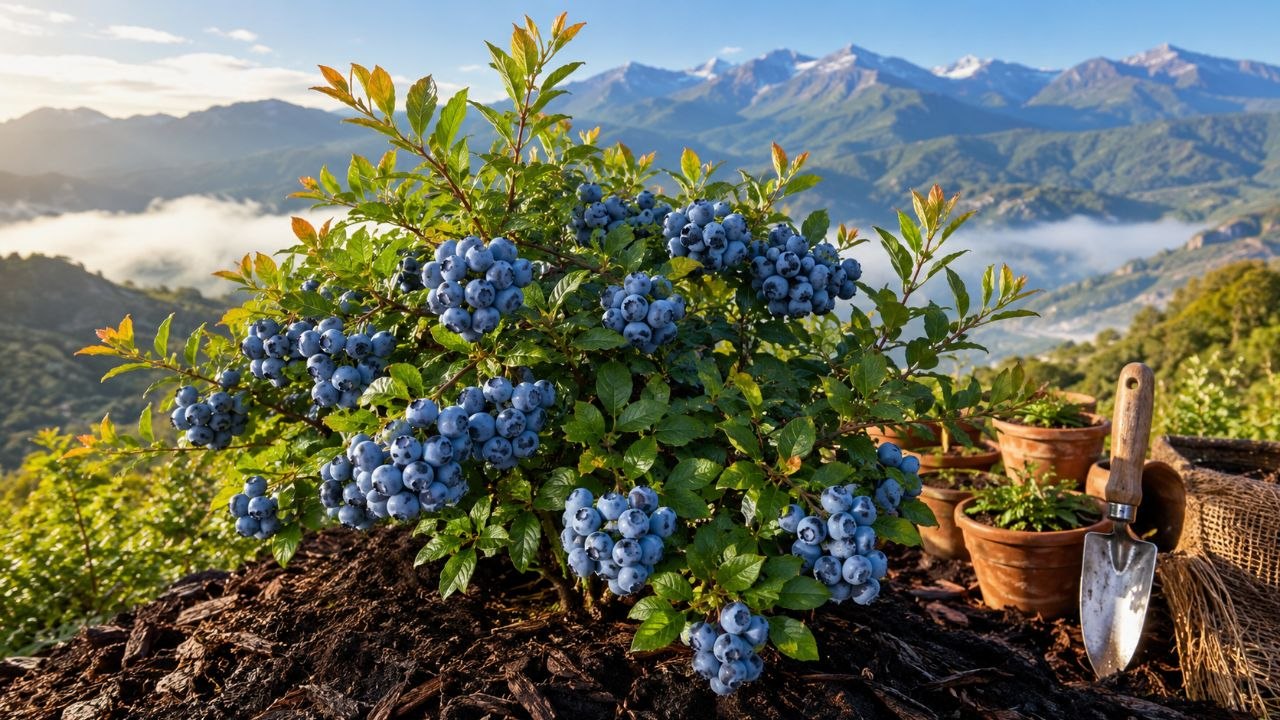
Spartan Blueberry Blueberries have gained immense popularity worldwide as a superfood rich in antioxidants, vitamins, and health benefits. Among the many varieties, the Spartan blueberry stands out for its exceptional fruit quality and vigor. Spartan is a Northern Highbush blueberry (Vaccinium corymbosum) developed in Michigan, USA. It is prized for producing very large, firm, light-blue berries with a delightful tangy-sweet flavor. However, growing Spartan in India presents unique challenges due to the country’s diverse and predominantly warm climate. This article explores why gardeners and farmers might choose Spartan, its detailed cultivation requirements, suitability for Indian conditions, step-by-step growing guide, potential issues, and alternatives. Whether you are a home gardener or considering commercial cultivation, understanding these aspects is crucial for success.
Why Choose the Spartan Blueberry Plant?
Spartan is often selected for several compelling reasons. First, its berries are among the largest in the blueberry world—often quarter-sized—with excellent firmness, making them ideal for fresh eating, shipping, and processing. The flavor is highly rated: a perfect balance of sweetness and tartness that many describe as superior. The plant is vigorous and upright, reaching 4–6 feet in height with an open habit that allows good air circulation, reducing disease risk. It offers a concentrated early-to-mid season harvest, which is advantageous for picking and marketing.
Spartan is also cold-hardy, tolerating temperatures as low as -30°F (-34°C), and provides beautiful orange-yellow fall foliage, adding ornamental value to gardens. It is productive, with mature bushes potentially yielding 15–20 pounds of fruit under ideal conditions. Partially self-fertile, it performs better with a pollinator variety. These attributes make Spartan a favorite in traditional blueberry regions like the northern United States, Canada, and parts of Europe. Gardeners choose it for reliability, fruit size, and quality when chill hours are sufficient.
Spartan Blueberry Requirements: Chill Hours and Climate Suitability
The biggest factor for Spartan is its high chill requirement of 800–1,000 hours (hours below approximately 7°C/45°F during winter dormancy). This makes it a classic Northern Highbush variety. In most of India’s tropical and subtropical plains, chill hours are very low (often under 300–400), leading to poor bud break, reduced flowering, weak growth, and minimal or no fruit production. High summer temperatures (35–45°C) and humidity can further stress the plant, increasing susceptibility to diseases.
Spartan is best suited for higher altitudes in Himachal Pradesh, Uttarakhand, Jammu & Kashmir, and parts of the Northeast hills, where winters are cooler and provide more chill hours. Experimental plantings in places like Palampur (Himachal Pradesh) have shown some adaptation for Northern Highbush types. In lowland areas, success is limited without advanced interventions like controlled environments or pot culture with chill simulation.
Step-by-Step Guide to Growing Spartan Blueberry in India
1. Site Selection and Soil Preparation Choose a location with full sun (at least 6–8 hours) or partial shade in very hot regions. Protection from strong winds and afternoon sun is beneficial. The most critical requirement is acidic soil with pH 4.5–5.5. Most Indian soils are neutral to alkaline, so test the soil first. Amend heavily with peat moss, pine bark, pine needles, or acidic potting mix. For ground planting, dig wide holes (twice the root ball width) and mix in organic matter. Raised beds or large containers (20–30 gallons) are recommended for better pH and drainage control, especially in warmer areas.
2. Planting Plant in early spring or late fall when dormant. Space plants 4–5 feet apart in rows 8–10 feet apart. Place the root ball so the crown is at or slightly above soil level. Water thoroughly after planting and apply a 3–4 inch layer of mulch (pine bark or wood chips) to retain moisture, suppress weeds, and maintain acidity. In India, container planting allows mobility for microclimate management.
3. Watering Blueberries have shallow roots and need consistent moisture—keep soil evenly damp like a wrung-out sponge, but avoid waterlogging. In hot Indian summers, this may mean daily watering, especially in containers. Drip irrigation is ideal. Mulch helps reduce evaporation. Overwatering or poor drainage leads to root rot.
4. Fertilization Use acid-loving plant fertilizers (e.g., for azaleas or rhododendrons) or specialized blueberry formulas. Apply in early spring and lightly after harvest. Avoid over-fertilizing, especially with nitrogen, which can burn roots. Incorporate sulfur or iron sulfate if pH rises. Leaf yellowing (chlorosis) indicates iron deficiency common in non-acidic soils.
5. Pruning Do minimal pruning in the first 2–3 years—remove only dead or damaged branches. In late winter (dormant season), prune older canes (over 5–6 years) to encourage new productive wood. Maintain an open structure for light and air. Proper pruning improves fruit size and plant health.
6. Pollination and Fruit Development Plant at least two varieties for better yields. Spartan blooms in spring; protect flowers from late frosts in hilly areas. Berries ripen over a few weeks in early-mid season. Netting is essential to protect from birds.
7. Pest and Disease Management Spartan has good resistance, but watch for fungal issues in humid conditions (use fungicides if needed), aphids, fruit flies, or birds. Maintain good sanitation and air flow. In India, heat stress and soil pH issues are bigger concerns than pests.
8. Harvesting and Post-Harvest Harvest when berries are fully blue and detach easily. Spartan has a good scar (dry picking point). Eat fresh, freeze, or process. Yields increase after year 3–4, peaking at maturity (around 6–8 years).
9. Overwintering and Chill Management In marginal Indian climates, techniques like refrigerating potted plants or using shade nets help, but results vary. In suitable hills, natural chill suffices.
Challenges and Alternatives for Indian Growers
Growing Spartan in most of India requires significant soil amendment and climate modification, increasing costs. For plains and southern regions, opt for low-chill or zero-chill Southern Highbush or Rabbiteye varieties such as Biloxi (zero chill, heat-tolerant), Misty, Emerald, Sharpblue, Star, or Sunshine Blue. These need 0–400 chill hours, tolerate up to 38–40°C, and perform reliably in pots or ground with acidic conditions. Many Indian farmers are successfully growing these commercially.
Health Benefits of Spartan Blueberries
Like all blueberries, Spartan berries are nutrient powerhouses—high in anthocyanins, fiber, vitamin C, and K. Regular consumption supports heart health, brain function, blood sugar control, and anti-inflammatory effects. Fresh home-grown berries offer superior taste and nutrition.
FAQs
Q1. Can Spartan blueberry grow in Delhi or Mumbai? Unlikely without heavy intervention. Low chill hours make it unsuitable; choose Biloxi or Misty instead.
Q2. How many chill hours does Spartan need? 800–1,000 hours. Insufficient chill leads to poor performance.
Q3. What is the best soil for Spartan? Acidic (pH 4.5–5.5), well-drained, rich in organic matter. Containers help in India.
Q4. When does Spartan fruit? Early to mid-season, typically late spring/summer in suitable climates.
Q5. Is Spartan self-pollinating? Partially; better yields with another variety nearby.
Q6. How long until first harvest? 1–3 years after planting, with full production in 4–6 years.
Q7. What are common mistakes? Ignoring soil pH, inconsistent watering, and planting in unsuitable warm climates.
Conclusion
The Spartan blueberry plant is an outstanding choice for its large, flavorful berries and vigorous growth in climates with sufficient winter chill. In India, it shines in cooler hilly regions but demands careful soil management and site selection elsewhere. For most growers across the country, low-chill varieties offer a more practical and rewarding path to success. With proper care—acidic soil, consistent moisture, and attention to chill needs—blueberries can thrive and provide years of delicious harvests and garden beauty. Start small in containers, experiment with varieties suited to your location, and enjoy the journey of growing this superfruit. Whether for home use or commercial potential, blueberries represent a promising addition to Indian horticulture when matched correctly to local conditions. Happy planting!